Mumbai-Pune Expressway Missing Link: 98% Finished; Set to Open This Maharashtra Day
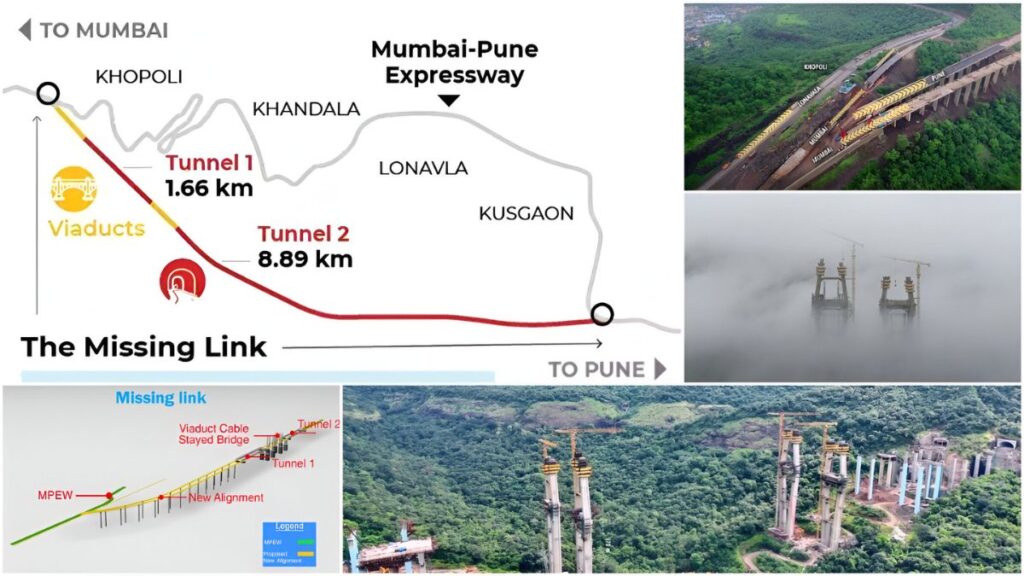

PUNE/MUMBAI – The era of crawling through the treacherous Khandala Ghat is officially nearing its end. The Maharashtra State Road Development Corporation (MSRDC) has confirmed that the ambitious Mumbai-Pune Expressway Missing Link project is now 98% complete, with the state government eyeing a grand inauguration on May 1, 2026, to coincide with Maharashtra Day.

Final Countdown: May 1 Launch for India’s Most Advanced Bypass
After years of engineering challenges and terrain-related delays, the 13.3 km “Missing Link” is in its final finishing stages. Senior MSRDC officials have indicated that the April 30 deadline for all civil works remains on track.
“Only about 2% of the work remains, primarily involving final road surfacing and safety installations on the Mumbai-bound corridor,” an official stated. Traffic is expected to be diverted to the new alignment as soon as mandatory load tests and safety clearances are secured in late April.
Engineering Marvel: Shorter Route, Faster Commute
The project is designed to bypass the existing 19.8 km winding stretch between Khopoli and Kusgaon, notorious for landslides and heavy-vehicle bottlenecks.
Key Features of the New Alignment:
- Travel Time: A reduction of 25 to 30 minutes for commuters.
- Distance: The expressway is shortened by approximately 6 km.
- Twin Tunnels: Includes a massive 8.9 km tunnel—among the longest in the country—designed to provide a flatter, straighter path through the Sahyadri range.
- Record-Breaking Bridge: A 650-metre cable-stayed bridge spanning Tiger Valley, supported by pylons rising 132 metres above the valley floor.
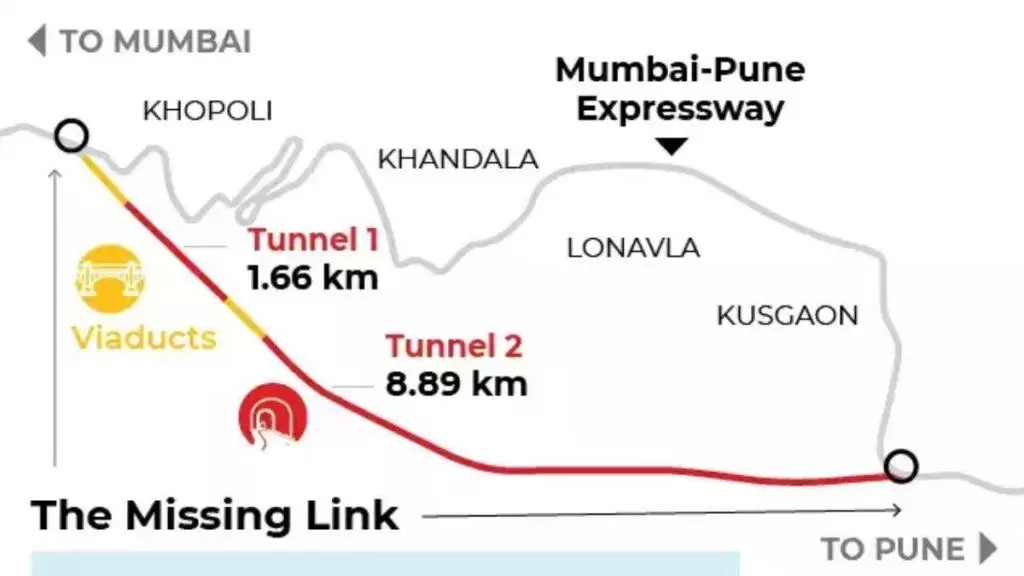
Ending the Khandala Ghat Bottleneck
For decades, the Khandala-Lonavala ghat section has been a chronic pain point. The existing route’s steep gradients and hairpin turns often lead to 20-km long queues during monsoon landslides or accidents involving heavy tankers.
The new Missing Link provides an 8-lane, access-controlled alternative that allows light motor vehicles and buses to bypass the ghats entirely. High-speed design standards will allow for consistent speeds of 100-120 km/h, significantly improving fuel efficiency and reducing vehicle wear-and-tear for thousands of daily commuters.
Safety Trials and Final Clearances
As the project enters the “commissioning phase,” MSRDC is focusing on the high-tech ventilation and fire-fighting systems within the tunnels. Load testing for the cable-stayed bridge is set to begin within the next 10 days. Once the Commissioner of Railway Safety (CRS) or equivalent road safety auditors provide the green light, the stretch will be opened to the public, marking a historic milestone in Maharashtra’s infrastructure journey.