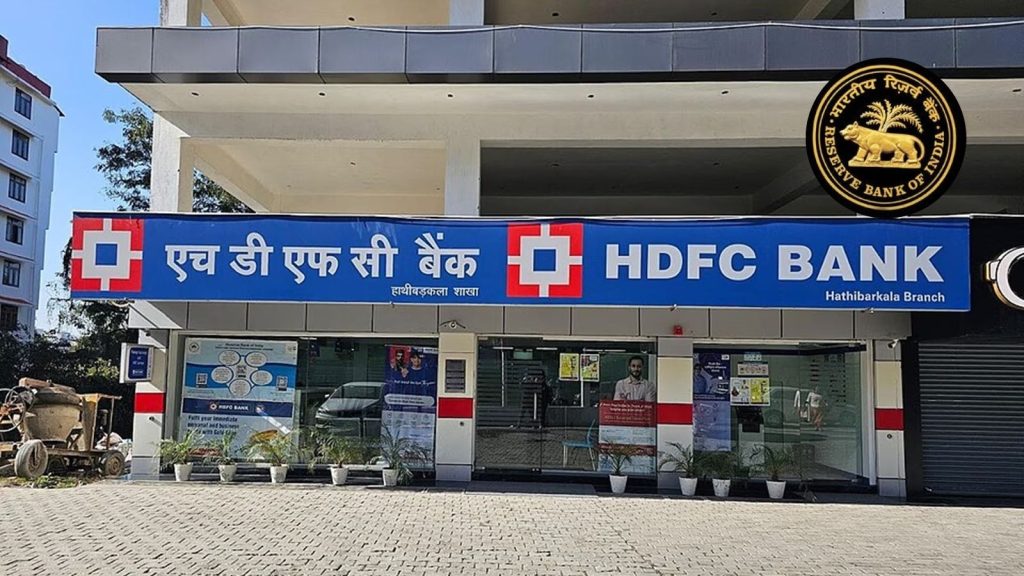
Is Your Money Safe at HDFC Bank? This is What RBI Said After Recent Developments

Key Takeaways
- HDFC Bank’s recent challenges raised concerns about whether ‘Is HDFC Bank safe’ for depositors.
- The RBI confirms that HDFC Bank is a Domestic Systemically Important Bank (D-SIB), meaning its failure could impact the entire economy.
- Despite leadership issues and the AT1 bond scandal, HDFC Bank’s financial health, including a 19.9% Capital Adequacy Ratio, remains strong.
- Deposits up to ₹5 lakh are insured, ensuring retail depositors’ funds are safe, according to RBI guidelines.
- Keki Mistry steps in as interim Chairman, while HDFC Bank operates with sufficient liquidity and no withdrawal limits.
Pune, March 26, 2026: In a week that saw India’s largest private lender lose nearly ₹96,000 crore in market valuation, millions of depositors are asking one urgent question: Is my money safe at HDFC Bank?

Following the abrupt resignation of Part-time Non-Executive Chairman Atanu Chakraborty and subsequent allegations regarding the mis-selling of AT1 bonds to NRI clients, the Reserve Bank of India (RBI) has stepped in with a rare, direct intervention to stabilize public sentiment.
The RBI “Shield”: Why HDFC Bank is “Too Big to Fail”
On March 19, 2026, the RBI issued Press Release 2025-2026/2288 to address the growing anxiety among retail and institutional investors. The central bank was unequivocal in its assessment, categorizing HDFC Bank as a Domestic Systemically Important Bank (D-SIB).
In banking parlance, D-SIB status means the institution is so integral to the Indian economy that its failure would trigger a systemic collapse. Consequently, the RBI subjects such banks to more stringent capital requirements and closer supervision.
“HDFC Bank is a Domestic Systemically Important Bank (D-SIB) with sound financials, professionally run board and competent management team,” the RBI statement noted. “The bank remains well-capitalized and the financial position of the bank remains satisfactory with sufficient liquidity.”
What Triggered the Panic? Leadership and Ethics Under Fire
The current turbulence began on March 18, when Atanu Chakraborty resigned, citing that certain “happenings and practices” at the bank did not align with his personal ethics. This “whistleblower-style” exit from a top-tier board member sent shockwaves through the exchanges.
Soon after, reports emerged from an internal probe involving the Dubai Financial Services Authority (DFSA). The investigation allegedly found that senior executives had mis-sold Credit Suisse Additional Tier-1 (AT1) bonds, complex high-risk instruments, to NRI customers by pitching them as “safe” alternatives to traditional Fixed Deposits (FDs).
Analyzing the Financial “Vitals”
Despite the governance clouds, HDFC Bank’s balance sheet remains robust. As of the latest quarter:
- Capital Adequacy Ratio (CAR): 19.9%, significantly higher than the 11.5% regulatory requirement.
- Gross Non-Performing Assets (GNPA): Stable at 1.24%, indicating high-quality loan recovery.
- Liquidity Coverage Ratio (LCR): Well above 110%, ensuring the bank can meet short-term obligations even during a “run” on deposits.
The RBI’s assessment confirmed that “there are no material concerns on record as regards its conduct or governance” based on their periodic audits.
The Verdict: Should Depositors Worry?
For the average retail depositor, your funds, up to ₹5 lakh, are legally protected by the Deposit Insurance and Credit Guarantee Corporation (DICGC). However, the RBI’s statement suggests the bank is nowhere near needing such a safety net.
While the stock market may remain volatile as the bank settles its leadership transition, with Keki Mistry stepping in as interim Chairman, the fundamental “safety” of savings accounts and fixed deposits remains intact under the watchful eye of the central bank.
Frequently Asked Questions (FAQs)
No. There are no restrictions on withdrawals. The bank continues to operate with “sufficient liquidity” as confirmed by the RBI.
It means the RBI considers HDFC Bank essential to India’s financial stability and will provide extraordinary support if ever required to prevent a failure.
No. The AT1 bond issue is an investment product dispute largely limited to specific NRI portfolios and does not impact the bank’s core deposit base or the safety of FDs.
The RBI has approved Keki Mistry as the interim Part-time Chairman for a period of three months following the resignation of Atanu Chakraborty.
Disclaimer: The information provided in this article is for educational and news-reporting purposes only. It does not constitute financial advice. Readers are encouraged to consult with a certified financial advisor before making significant changes to their banking or investment portfolios. While every effort has been made to ensure accuracy, the situation remains evolving.