Starting This April, Your Flight Tickets May Cost More As Government Withdraws Fare Cap Amid Rising Fuel Costs
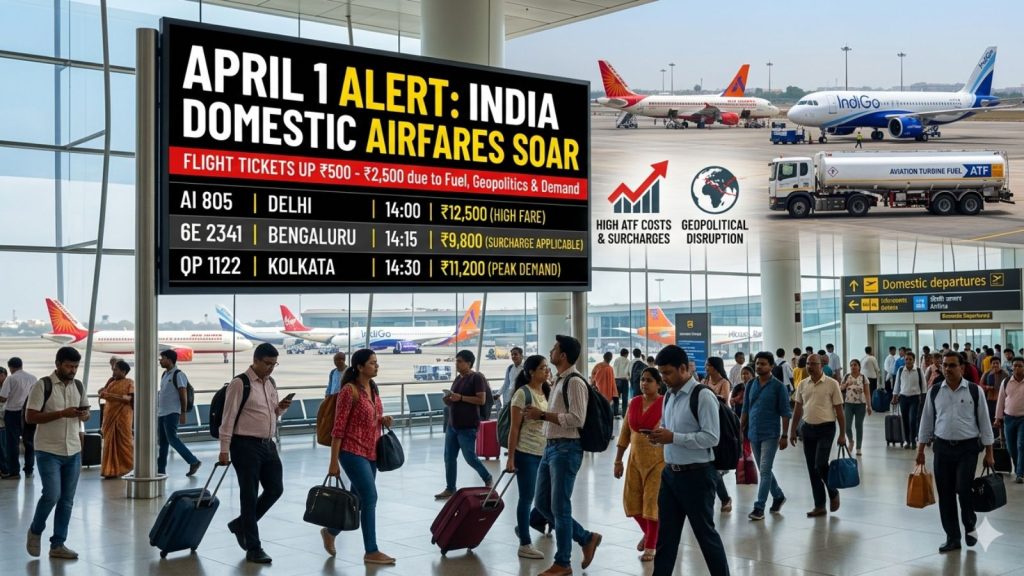
AI-Generated Image for Representation

Flying home for the summer or planning a quick April getaway? You might want to lock in those tickets today, as the cost of taking to the skies in India is about to hit a turbulent patch.

The Return of Market-Driven Pricing
On Monday, March 23, 2026, the Ministry of Civil Aviation announced the removal of temporary fare caps on domestic flights. While these caps were originally introduced in late 2025 to prevent “predatory pricing” during operational disruptions, their removal signals a shift back to a market-linked regime. However, this freedom comes at a time when global pressures are pushing costs in only one direction: upward.
Why Your Flight Ticket is Getting Costlier
The projected hike of ₹500 to ₹2,500 on domestic sectors is not a random spike but a result of a “triple threat” facing the Indian aviation industry:
- Soaring ATF Prices: Aviation Turbine Fuel (ATF) accounts for nearly 45% of an airline’s operating cost. With global crude oil prices volatile due to the West Asia conflict, the next monthly price revision on April 1 is expected to be a major catalyst for fare adjustments.
- Fuel Surcharges: Leading carriers have stopped waiting for April. IndiGo has already implemented a domestic fuel charge of ₹425, while the Air India Group and Akasa Air have introduced similar tiered surcharges to offset immediate losses.
- Geopolitical Detours: Conflict-hit airspaces in the Middle East have forced airlines to take longer, more circuitous routes. This doesn’t just increase travel time; it significantly increases fuel consumption and “war-risk” insurance premiums, costs that are ultimately passed down to the passenger.
DGCA Summer Schedule and Peak Demand
The Directorate General of Civil Aviation (DGCA) recently released the summer flight schedule, effective from March 29 to October 24, 2026. Despite the high demand, the industry is seeing a slight reduction in weekly flight capacity compared to last year. This demand-supply mismatch, combined with the removal of fare caps, means that last-minute bookings and peak-hour flights on popular routes like Delhi-Mumbai or Bengaluru-Delhi could see the sharpest price jumps.
How to Save on Air Travel
Aviation Minister Ram Mohan Naidu has urged airlines to maintain “pricing discipline,” but the reality for travelers remains stark. To avoid the brunt of the April 1 hike, experts suggest:
- Booking at least 21 days in advance to avoid the “last-minute” surcharge tier.
- Opting for mid-week travel where demand, and therefore the dynamic pricing impact, is lower.
- Checking for ‘Hidden’ Fees: With the new DGCA norms requiring 60% of seats to be free for selection, ensure you aren’t paying extra for “preferred” seating unless necessary.