Pune-Mumbai in 48 Minutes: Budget 2026 Approves Bullet Train Between Two Cities
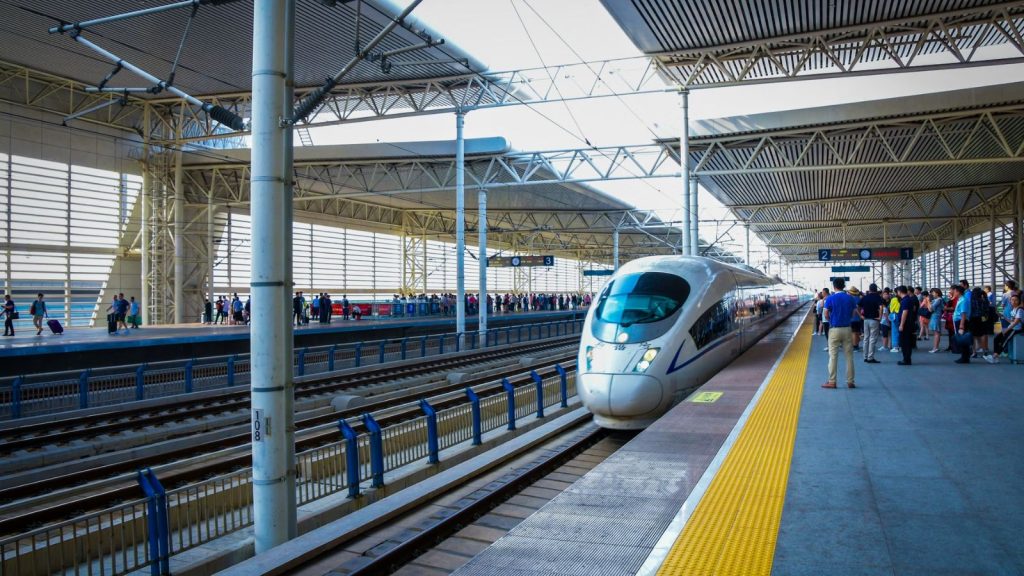

Pune and Mumbai are about to become “twin cities” in the truest sense as the central government greenlights a revolutionary high-speed rail corridor designed to shrink the commute to under an hour.

The long-standing dream of a sub-one-hour journey between India’s financial capital and its IT-auto hub is officially on the fast track. Following the landmark announcements in the Union Budget 2026-27, Union Railway Minister Ashwini Vaishnaw has confirmed that the Mumbai-Pune Bullet Train will reduce travel time to a mere 48 minutes. This project, part of a massive ₹16 lakh crore national high-speed rail expansion, aims to integrate the two regional economies into a single, seamless urban corridor.
A New Era for Maharashtra: The 48-Minute Revolution
The Mumbai-Pune High-Speed Rail (HSR) project is no longer just a proposal on paper. With a maximum design speed of 350 kmph and an operational speed of 320 kmph, the corridor will bypass the geographic hurdles of the Bhor Ghat that currently slow down the Intercity and Deccan Queen expresses.
By slashing the travel time from the current 3-4 hours to just 48 minutes, the Ministry of Railways is effectively merging the labor markets of both cities. For professionals living in Pune and working in Mumbai, or vice versa, the daily commute will soon be comparable to a local suburban train ride, but with world-class speed and comfort.
Budget 2026: Record Allocation for Maharashtra Railways
The Union Budget 2026-27 has been a watershed moment for Maharashtra’s infrastructure. Finance Minister Nirmala Sitharaman announced a record allocation of ₹23,926 crore specifically for railway development in the state.
This funding is earmarked not only for the Mumbai-Pune Bullet Train but also for the broader “South High-Speed Diamond” network. Minister Ashwini Vaishnaw emphasized that the technical expertise gained from the ongoing Mumbai-Ahmedabad project will be leveraged to ensure the Mumbai-Pune-Hyderabad line moves at an unprecedented pace.
Key Technical Specs of the Mumbai-Pune Bullet Train
- Total Travel Time: 48 Minutes.
- Design Speed: 350 kmph.
- Track Gauge: Standard Gauge (High-Speed dedicated).
- Infrastructure: Fully elevated tracks to avoid land acquisition delays and ensure safety.
- Capacity: High-frequency rakes designed to handle peak-hour loads between the two metros.
The ‘Growth Connectors’: 7 New Corridors to Link India
In her Budget speech, Finance Minister Nirmala Sitharaman identified these high-speed routes not merely as transport lines, but as “Growth Connectors” designed to spark economic activity in Tier-2 and Tier-3 cities. By creating a dedicated network for blazing-fast travel, the government aims to decentralize growth from overpopulated metros.
The seven newly approved corridors that will form the backbone of India’s high-speed grid are:
- Mumbai – Pune: The primary gateway for Maharashtra’s industrial belt.
- Pune – Hyderabad: Connecting the nation’s two biggest IT hubs.
- Hyderabad – Bengaluru: Linking the “Silicon Valley of India” to the Deccan.
- Hyderabad – Chennai: Strengthening the Southern economic diamond.
- Chennai – Bengaluru: A high-speed link for the manufacturing and tech corridor.
- Delhi – Varanasi: A flagship North Indian route connecting the capital to the spiritual heartland.
- Varanasi – Siliguri: A strategic corridor boosting connectivity to the Northeast via Bihar.
Railway Minister Ashwini Vaishnaw noted that these corridors together span nearly 4,000 km and are projected to attract an investment of ₹16 lakh crore, positioning the Indian Railways as the core engine of a Viksit Bharat.
Beyond Pune: Connectivity to Hyderabad and the South
The Mumbai-Pune corridor serves as the critical first leg of a much larger vision: the Pune-Hyderabad High-Speed Rail. Once the entire stretch is operational, the journey from Pune to Hyderabad is expected to take only 1 hour and 55 minutes.
This expansion is part of the seven new high-speed corridors identified in the Budget, covering nearly 4,000 km across India. By linking Mumbai and Pune to Bengaluru and Chennai via this high-speed network, the government is laying the foundation for a “Viksit Bharat 2047,” where distance is no longer a barrier to economic growth.
#ViksitBharatBudget:
— Ashwini Vaishnaw (@AshwiniVaishnaw) February 1, 2026
7 High-Speed Rail Corridors as growth connectors between cities ⬇️
🚅 Mumbai to Pune
🚅 Pune to Hyderabad
🚅 Hyderabad to Bengaluru
🚅 Hyderabad to Chennai
🚅 Chennai to Bengaluru
🚅 Delhi to Varanasi
🚅 Varanasi to Siliguri pic.twitter.com/XY5PEVge1y
Real Estate and Economic Impact on the Pune-Mumbai Region
Industry experts suggest that the 48-minute connectivity will trigger a massive real estate boom in Pune’s peripheral areas. With Mumbai’s property prices reaching saturation, Pune offers a viable residential alternative for Mumbai’s workforce, provided the commute is neutralized.
Furthermore, the manufacturing hubs in Chakan and Talegaon and the IT clusters in Hinjewadi stand to gain significantly from faster logistical and executive movement between the two cities. Minister Vaishnaw noted that this project is not just about “trains” but about “regional transformation,” creating millions of man-days of employment during the construction phase and permanent economic shifts thereafter.
Overcoming the Ghats: Engineering Marvel in the Making
One of the most significant challenges for the Mumbai-Pune route has always been the rugged terrain of the Western Ghats. The high-speed rail corridor will utilize advanced tunneling technologies and viaducts to maintain a straight alignment, essential for maintaining speeds of 320 kmph.
Drawing from the NHSRCL’s experience in the undersea tunnel for the Ahmedabad route, the Mumbai-Pune section will likely feature specialized engineering to navigate the altitude difference between the coastal plains of Mumbai and the Deccan plateau of Pune.
What’s Next? Timeline and Execution
While the Detailed Project Report (DPR) for the Mumbai-Pune-Hyderabad section is already in advanced stages, the fresh budgetary push allows for immediate land surveying and pre-construction activities. The government intends to work on all seven corridors simultaneously to meet the mid-term goals of the National Rail Plan.
As Pune residents await the first pillar of this ambitious project, the sentiment remains high. The “48-minute” figure has become a symbol of a modern, fast-paced India that is ready to compete with global infrastructure standards.
For more live updates on Pune, visit our Pune News Today page.