Union Budget 2026: New Tax Slabs Announced, Standard Deduction Hiked to ₹1 Lakh; Big Relief for Salaried Class
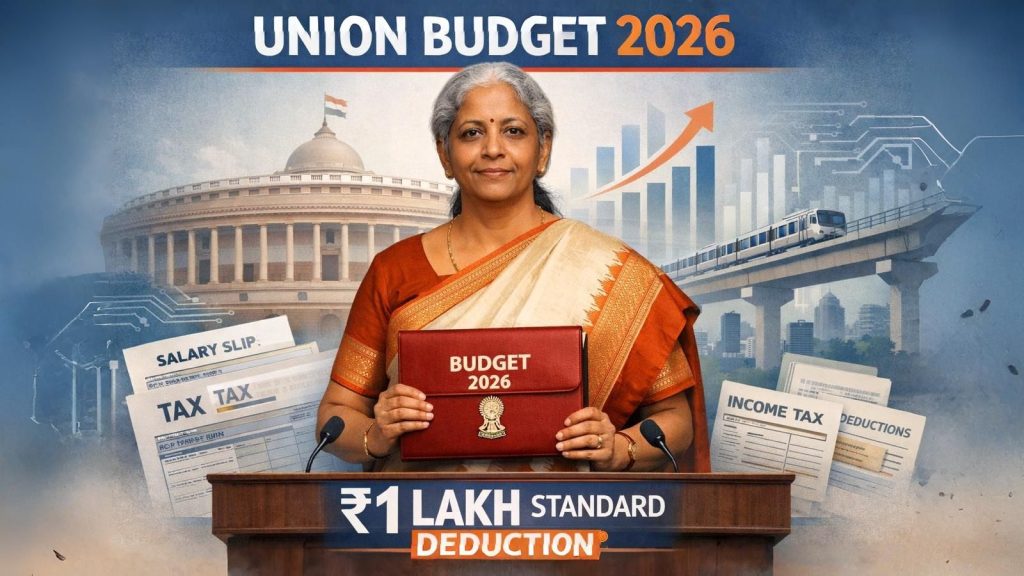

In a move that balances aggressive infrastructure growth with middle-class relief, Finance Minister Nirmala Sitharaman presented the Union Budget 2026-27 today, marking her record-breaking ninth consecutive budget. The “Viksit Bharat” roadmap is now officially operational, anchored by the brand-new Income Tax Act 2025 and a massive shift toward a high-tech, self-reliant economy.

The Middle-Class Bonanza: New Tax Slabs and Standard Deduction
The biggest headline for Pune’s vast salaried population and India’s middle class is the significant relaxation in direct taxes. Finance Minister Nirmala Sitharaman has delivered on the long-standing demand to offset inflation by restructuring the New Income Tax Regime, which is now the default and most attractive path for taxpayers.
Standard Deduction Increased to ₹1 Lakh
In a major relief for salaried employees and pensioners, the Standard Deduction has been raised to ₹1,00,000 from the previous ₹75,000. This move alone is expected to put more disposable income into the hands of over 4 crore taxpayers, directly boosting urban consumption.
New Income Tax Slab 2026-27 (New Regime)
The transition to the Income Tax Act 2025 (replacing the 1961 Act) has simplified the brackets. Under the revised structure, there is zero tax for income up to ₹12 lakh (including the Section 87A rebate).
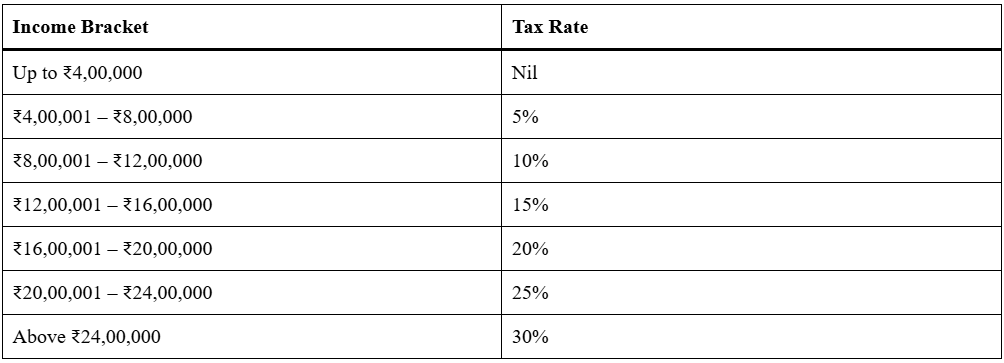
Editor’s Note: For an individual earning ₹15 lakh annually, the effective tax savings under this new structure, combined with the enhanced standard deduction, could be upwards of ₹35,000 compared to the previous year.
Sectoral Revolution: Biopharma Shakti and Nuclear Energy
The Union Budget 2026 isn’t just about tax; it’s a strategic blueprint for “Intelligence-first” infrastructure.
Biopharma Shakti Scheme
FM Sitharaman announced the Biopharma Shakti scheme with an outlay of ₹10,000 crore. This initiative aims to turn India into a global biomanufacturing hub. It includes the establishment of three new NIPERs (National Institutes of Pharmaceutical Education and Research) and a network of 1,000 accredited clinical trial sites.
Energy Security: The Nuclear Mission
To meet the energy demands of a growing AI and data center economy, the government launched a Nuclear Energy Mission. The goal is to develop 100 GW of nuclear power by 2047, with an immediate ₹20,000 crore investment into Small Modular Reactors (SMRs).
Infrastructure and “Kavach 4.0”
Infrastructure remains the backbone of the budget with a capital expenditure (Capex) outlay crossing ₹12 lakh crore.
- Railways: The focus has shifted from speed to safety with the rollout of Kavach 4.0, an advanced indigenously developed anti-collision system.
- States’ Support: The Centre has extended the ₹1.5 lakh crore interest-free loan to states for another year to encourage regional infrastructure reforms.
- Urban Development: Specific focus on Tier-2 and Tier-3 cities through the “SWAMIH Fund-2” to complete stalled housing projects.
Indirect Tax Reforms: GST 2.0 and Customs Duty
To counter global trade volatility and “Trump Tariffs,” the government is fast-tracking GST 2.0.
- Two-Rate Structure: The roadmap for a simplified two-rate GST structure (5% and 18%) was discussed to reduce compliance friction.
- Customs Rationalization: Basic Customs Duty (BCD) has been removed for critical minerals like Cobalt, Lithium, and Copper scrap. This is a direct win for the EV (Electric Vehicle) and electronics manufacturing sectors in hubs like Pune and Bengaluru.
- Electronics: To boost “Make in India,” the exemption on Open Cells for LED/LCD TVs and capital goods for mobile phone manufacturing has been extended.
Focus on Agriculture and Rural Economy
The Budget 2026-27 introduces the Prime Minister Dhan-Dhaanya Krishi Yojana, focusing on 100 “Agri Districts.”
- KCC Loans: The credit limit for farmers under the Kisan Credit Card (KCC) scheme has been potentially hiked, with a 6-year mission specifically for pulses (Tur, Urad, Masoor) to ensure price stability.
- Climate Resilience: 109 new high-yielding and climate-resilient varieties of seeds are being released for 34 crops.
Macroeconomic Health: Fiscal Deficit and GDP Growth
Despite global headwinds, India’s macro numbers remain robust.
- Fiscal Deficit: The target for FY26 is set at 4.4%, with a clear glide path to hit 4% by FY27.
- GDP Growth: Real GDP growth for the upcoming year is projected at 7.4%, making India the fastest-growing major economy for the fourth year running.
Summary of Key Takeaways for PuneNow Readers
- Standard Deduction: Up to ₹1 Lakh.
- TDS Relief: Rent TDS threshold increased from ₹2.4 lakh to ₹6 lakh per annum.
- Insurance: FDI limit in insurance increased to 100% for certain categories.
- Senior Citizens: Tax deduction limits for medical expenses/interest doubled to ₹1 lakh.
- Gold & Silver: Import duty adjustments have led to a significant drop in market prices today.