Goodbye Khandala Ghat? Two-Hour Travel Between Pune and Mumbai in Sight from 1st May; Missing Link Nearly Complete
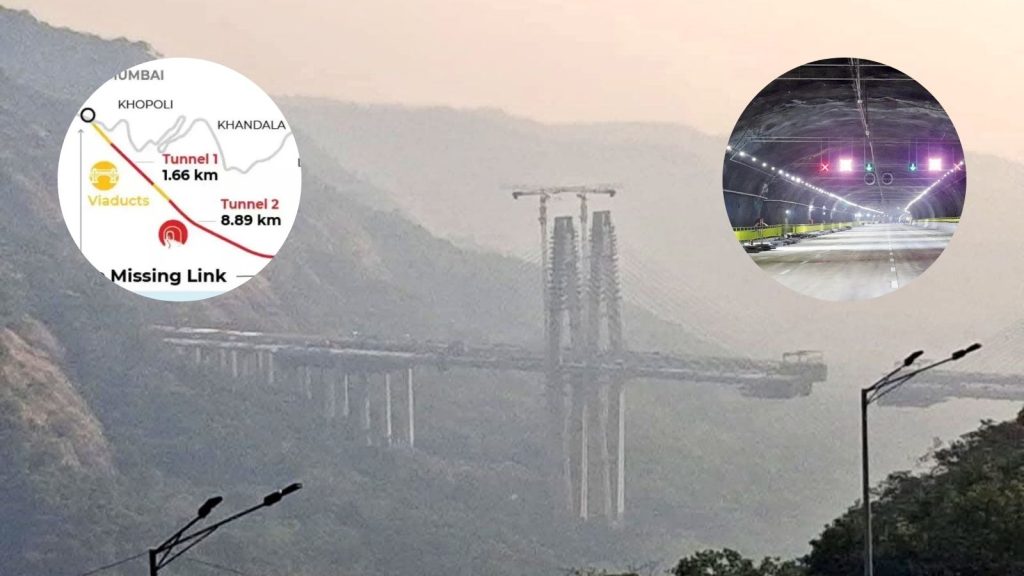

Say goodbye to the Khandala Ghat bottlenecks. After years of anticipation and engineering hurdles, the 13.3-km “Missing Link” is just weeks away from transforming your Mumbai-Pune commute.

For over two decades, the “Khandala Ghat” has been both a scenic wonder and a commuter’s nightmare. If you’ve ever traveled between Pune and Mumbai on a weekend, you know the drill: the 10-lane traffic bottleneck where the Expressway and NH-4 merge, the crawling speeds through sharp hairpin turns, and the constant anxiety of monsoon landslides.
But as of January 2026, the wait is almost over.
The Maharashtra State Road Development Corporation (MSRDC) has officially moved into the “Final Countdown” phase for the Mumbai-Pune Expressway Missing Link Project. With the project now 98% complete, officials have confirmed that the ribbon-cutting is set for May 1, 2026, coinciding with Maharashtra Day.
This isn’t just another road opening; it is an engineering feat that will fundamentally change the geography of Western Maharashtra. By bypassing the steep slopes of the Bor Ghat entirely, travelers will finally experience a straight-line, high-speed connection that slashes travel time by nearly 30 minutes.
Whether you are a daily business traveler or an occasional weekend tourist, here is everything you need to know about the status, the route, and the “Missing Link” that is about to make the Mumbai-Pune journey faster than ever before.
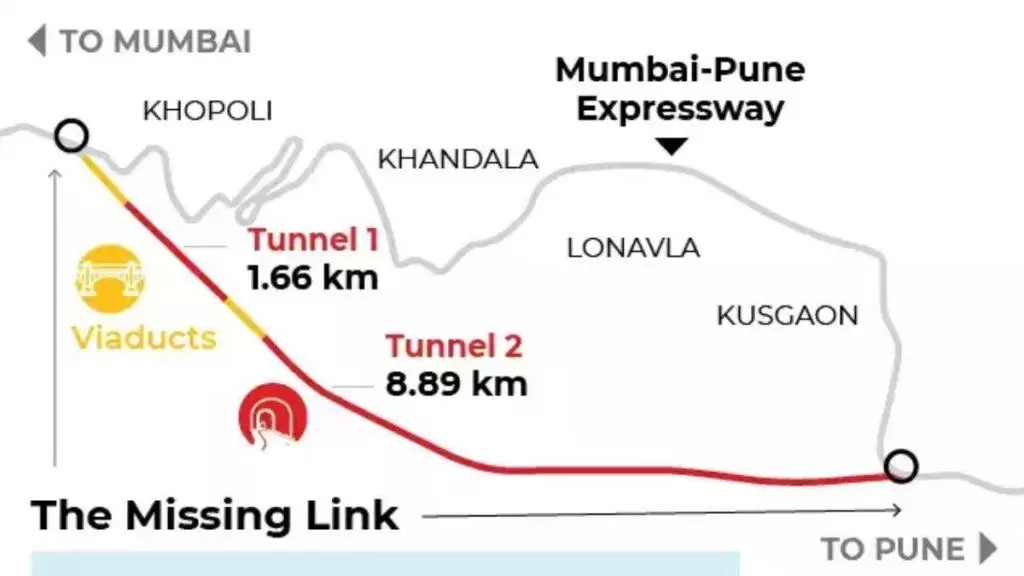
THE MAY 1 MILESTONE – STATUS AND TIMELINE
For regular travelers between Pune and Mumbai, the wait for a “Ghat-free” journey is entering its final hours. As of January 2026, the Maharashtra State Road Development Corporation (MSRDC) has confirmed that the Mumbai-Pune Expressway Missing Link Project is 98% complete.
While the project faced multiple extensions due to the treacherous terrain and record-breaking monsoon wind speeds in the Sahyadris, the target is now firm: The Missing Link will officially open to the public on May 1, 2026, marking Maharashtra Day with one of the state’s biggest infrastructure wins.
What’s left to do?
Almost there! The cable-stayed deck has only a small gap to cover now and looking at the pace at which the work has progressed in the past few months, looks like the bridge will be ready in the next 3-4 months.
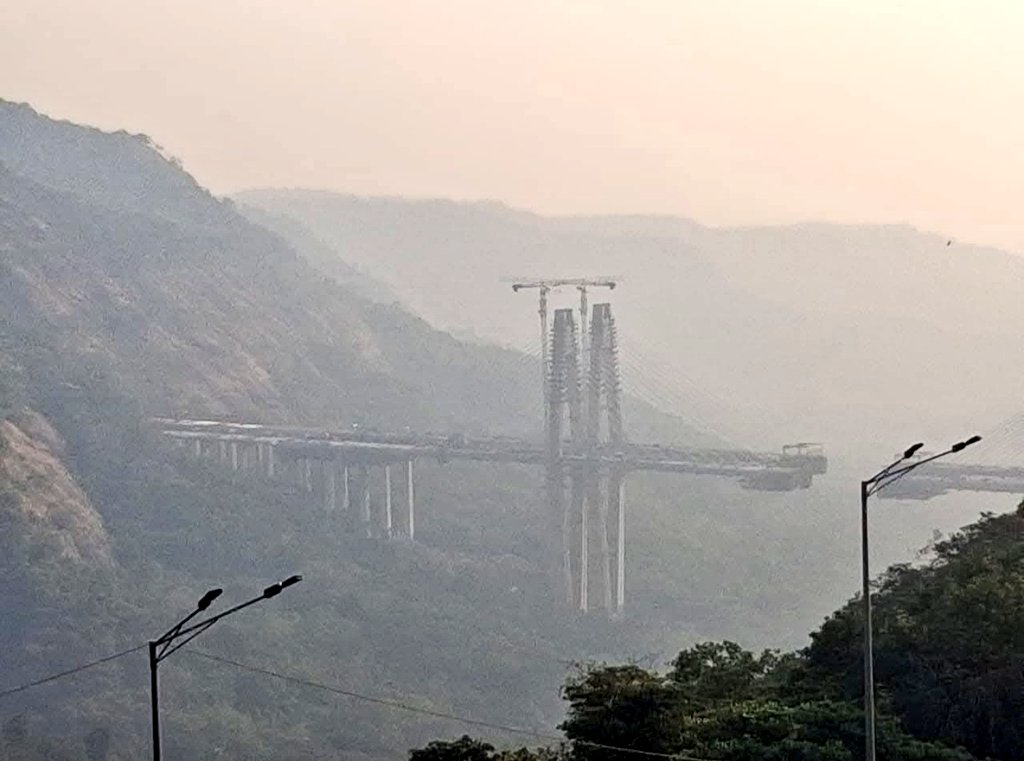
With the structural work on the massive tunnels and the cable-stayed bridge essentially finished, the focus has shifted to:
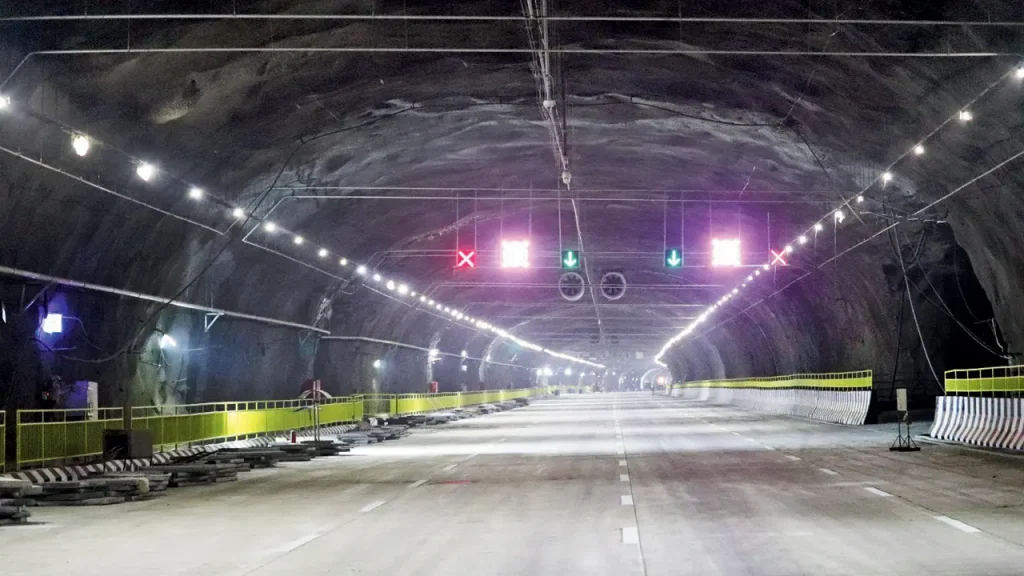
- System Testing: Stress-testing the high-tech ventilation and fire safety systems inside the 8.9-km tunnel.
- Final Deck Work: Completing the last segments of the cable-stayed bridge in Tiger Valley.
- Safety Audits: Round-the-clock monitoring by MSRDC engineers to ensure the “Zero Fatality” goal is met before the first car enters.
BEYOND THE GHAT – WHY THIS CHANGES EVERYTHING
The “Missing Link” isn’t just a new road; it is a total bypass of the most dangerous and congested 19-km stretch of the current expressway. Currently, vehicles must navigate the winding, steep Lonavala-Khandala Ghat, where the 10-lane traffic from the Expressway and NH-4 merges into a narrow 6-lane bottleneck.
The “Commuter Math”:
| Feature | Current Route (Ghat) | The Missing Link (2026) |
| Distance | 19.8 km | 13.3 km |
| Travel Time | 35–45 minutes (approx.) | 10–12 minutes |
| Time Saved | – | 25–30 Minutes |
| Terrain | Steep hairpins / landslides | Straight, level high-speed tunnels |
By cutting nearly 6 km off the distance and bypassing the hairpins, your total journey from Pune to Mumbai can now be completed in roughly 2 to 2.5 hours, especially when paired with the now-operational Atal Setu for those heading to South Mumbai.
ENGINEERING MARVELS & REGIONAL IMPACT
This project features two of India’s most significant engineering milestones:
- Asia’s Widest Tunnels: Two twin tunnels (8.9 km and 1.7 km long) that are 23.3 meters wide, supporting 4 lanes plus an emergency lane in each direction.
- India’s Tallest Cable-Stayed Bridge: A 650-meter bridge soaring 182 meters (nearly 60 storeys) above the Tiger Valley. It is taller than the pylons of the Bandra-Worli Sea Link.
Connecting the Infrastructure Dots
The Missing Link is the “final piece” of a much larger puzzle for Pune residents. Just as the Pune Outer Ring Road is set to redirect heavy traffic away from the city center, the Missing Link ensures that once you hit the expressway, there are no more “forced stops” or mountain bottlenecks. Together, these projects are turning the Pune-Mumbai region into a single, seamless economic zone.
FAQ SECTION – TRAVELER INTELLIGENCE
To ensure your readers have the most practical information for their next trip, here are the most frequently asked questions regarding the “Missing Link” opening.
Frequently Asked Questions about the Mumbai-Pune Missing Link
Q1: Will there be a separate toll for using the Missing Link? A: No. MSRDC has clarified that while the project cost exceeds ₹6,600 crore, there is no plan for a “new” toll plaza specifically for this stretch. The current toll at Khalapur and Talegaon will cover the journey. However, the toll collection period for the entire expressway is likely to be extended beyond 2045 to recover costs.
Q2: Are all vehicles allowed to use the new tunnels and bridge? A: Almost all vehicles permitted on the Expressway can use it. However, vehicles carrying hazardous materials (tankers) will not be allowed through the 8.9-km tunnel for safety reasons. They must continue using the old NH-4 / Ghat section. As always, two-wheelers and three-wheelers remain prohibited.
Q3: What is the speed limit on the Missing Link? A: Unlike the Ghat section, where speeds drop to 40–60 km/h due to curves, the Missing Link is designed for a consistent speed of 100–120 km/h. The straight alignment and 23-meter wide tunnels allow for much safer high-speed travel.
Q4: Will this bypass Lonavala completely? A: Yes. If your destination is Pune or Mumbai (and not Lonavala itself), you will bypass the entire Lonavala-Khandala hill station traffic. If you wish to visit Lonavala, you will still need to use the existing exits before the Missing Link begins.
Q5: How does this project connect with the Pune Outer Ring Road? A: The Missing Link solves the “entry/exit” bottleneck of the expressway. Once Pune’s Outer Ring Road is complete, travelers from areas like Wagholi or Hinjewadi can bypass Pune city traffic, hit the Expressway, and use the Missing Link for a near-stopless journey to Mumbai.
The opening of the Missing Link on May 1, 2026, represents more than just a shorter commute; it is the final piece of the puzzle for Maharashtra’s “Golden Triangle.” By removing the unpredictable Khandala Ghat from the equation, the MSRDC is delivering a safer, faster, and more reliable corridor for millions of travelers.
As we approach the inauguration, keep an eye on final safety trials during March and April. The days of monsoon landslides causing 5-hour delays at Lonavala are finally coming to an end.
For more live updates on Pune, visit our Pune News Today page.