Why We Can’t Innovate Our Way Out of the Climate Crisis? … and What Actually Will?

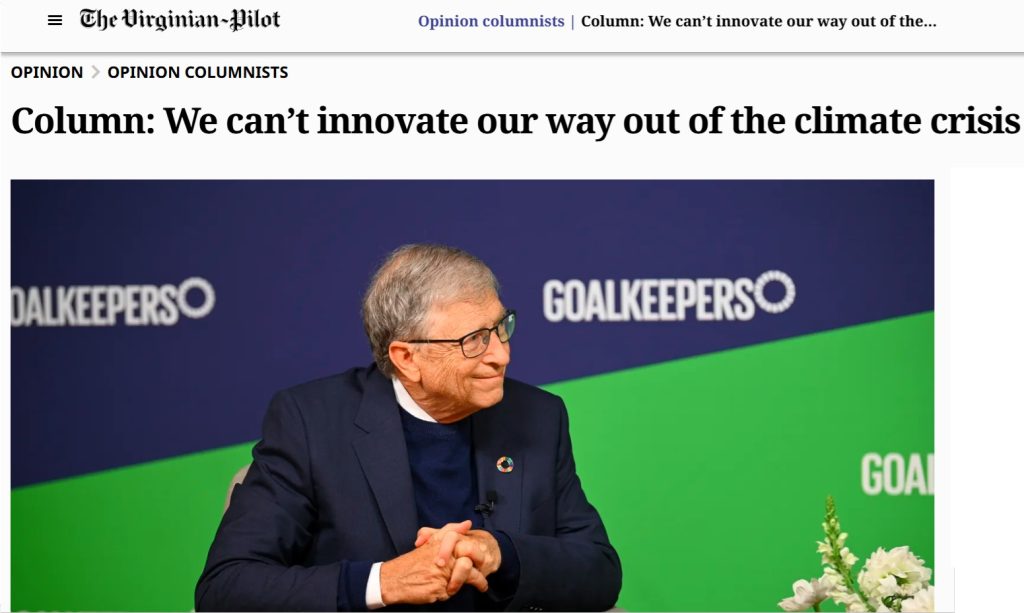
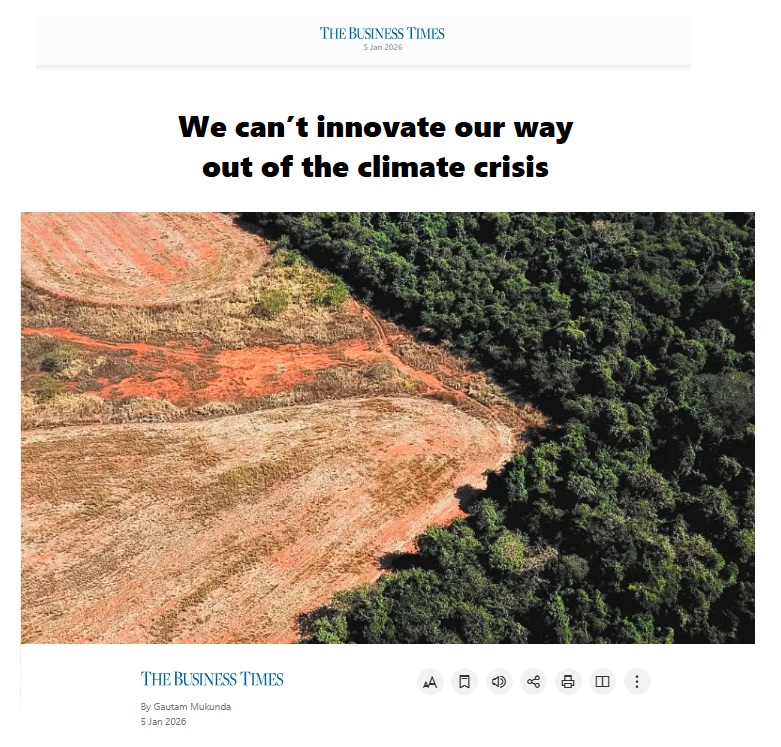
I recently came across an excellent column by Gautam Mukunda : ‘ We can’t innovate our way out of the climate crisis’ that challenges a deeply ingrained belief in our professional and innovation circles, that technology alone will save us from climate change. The piece was written in response to a recent shift in perspective from Bill Gates, who argued that innovation and technology must be our focus to adapt to a warming world and improve human welfare even as warming continues.

Mukunda’s core message is clear: innovation cannot be the silver bullet for the climate crisis. He observes that while technological progress has helped in many domains, it alone won’t reverse or halt the systemic cause of climate change. This is especially true when consumption patterns, political priorities, and economic structures remain unchanged. Innovation can help adapt or mitigate certain harms, but it can’t address the root cause, our unbounded fossil-fuel dependence and the way we consume.
He reflects on comments by Bill Gates and others who emphasize innovation, such as clean energy breakthroughs and climate tech, to address climate change. Mukunda argues that while innovation has undoubtedly improved lives and mitigated some challenges, we risk setting the bar too low if we think innovation alone will secure a better world for future generations. He stresses that reducing emissions, changing behaviour, and reshaping systems are essential, not just relying on promising technologies to save us
Mukunda respectfully pushes back on the idea that simply focusing on novel technologies will be enough, whether that’s carbon capture, advanced renewables, or AI-driven solutions. The climate crisis is too vast, too structural, and too tied to human behavior for innovation alone to save us.
Here’s what really struck me:
Innovators Cannot stop climate change —
—but—
poorly trained innovators will surely accelerate it.
This line isn’t just poetic, it’s urgent. If engineers, managers, policymakers, and leaders enter professional life climate-agnostic, they can inadvertently design systems that worsen emissions and ecological damage.
I completely agree with Mukunda (and implicitly, his critique of Gates’ optimism on tech alone): we will never innovate our way out of the climate crisis if we continue to treat technology as a magic wand. We must urgently redefine success to include sustainable consumption, behavioral change, and equitable policies that radically alter how societies consume resources and value nature.
Innovation alone is like rearranging deck chairs on a sinking ship -
we need systemic change, not shinier gadgets
💭 A Personal Reflection from My Journey
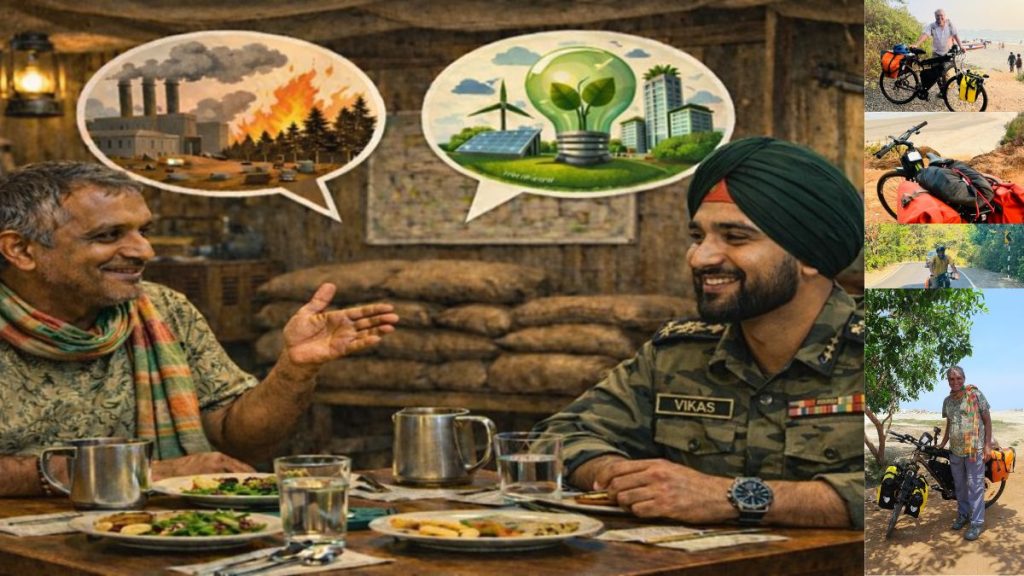
Some time ago, during my climate advocacy journey of 20,000 km along the borders of India with the message of #ChangeBeforeClimateChange , I was warmly hosted by a senior officer of a paramilitary force in a small remote town in Assam, Northeast India. A brilliant engineer by training, an electrical and electronics telecommunication graduate from one of India’s premier institutions, he cleared the Civil Services exam and dedicated his life to national service. During dinner, we had a spirited debate.
His position was sincere: “We cannot stop development. Trees on mountains will have to go if the nation is to progress.” In his view, innovation and better technology, especially carbon capture and other futuristic tools, were the way forward. We need more and better engineers, he insisted, because difficulty is not a reason to stop progress; it’s a reason to innovate harder.
I respected his service, his intellect, and his heartfelt commitment to national development. But I offered a different perspective:
You cannot rely on technology alone to stop climate change.
Technology, like engineers across domains, cannot by itself solve the crisis. And here’s the nuance: good innovation can help us adapt and transition, but bad innovation, or innovation without climate literacy, can definitely accelerate climate degradation.
This is why I keep saying:
Innovators Cannot stop climate change, but poorly trained innovators will surely accelerate it.
We need to sensitize future professionals, whether they are engineers, managers, economists, or policymakers, to be climate literate from the start. Climate change is not just an engineering problem or a policy problem, it’s a human problem. And it demands systemic, cultural, and everyday behavioral shifts.
🌱 What Needs to Change?
✅ A complete mindset reset – #_ChangeBeforeClimateChange – across education and professional culture, so climate literacy is foundational
✅ Encouraging sustainable lifestyles and mindful consumption rather than endless consumption
✅ Policy that moves beyond consumer-driven growth toward sustainable, regenerative economies
✅ Recognition that innovation alone is not the solution, but it must complement deeper systemic change
So I ask my network: What will truly get us out of this crisis if not just innovation? How do we ensure future leaders don’t just invent, but inhabit solutions that serve both people and planet?
Would love to hear your thoughts. 🌿
#ClimateCrisis #Sustainability #ClimateLiteracy #Innovation #MindsetShift #_Change_Before_Climate_Change
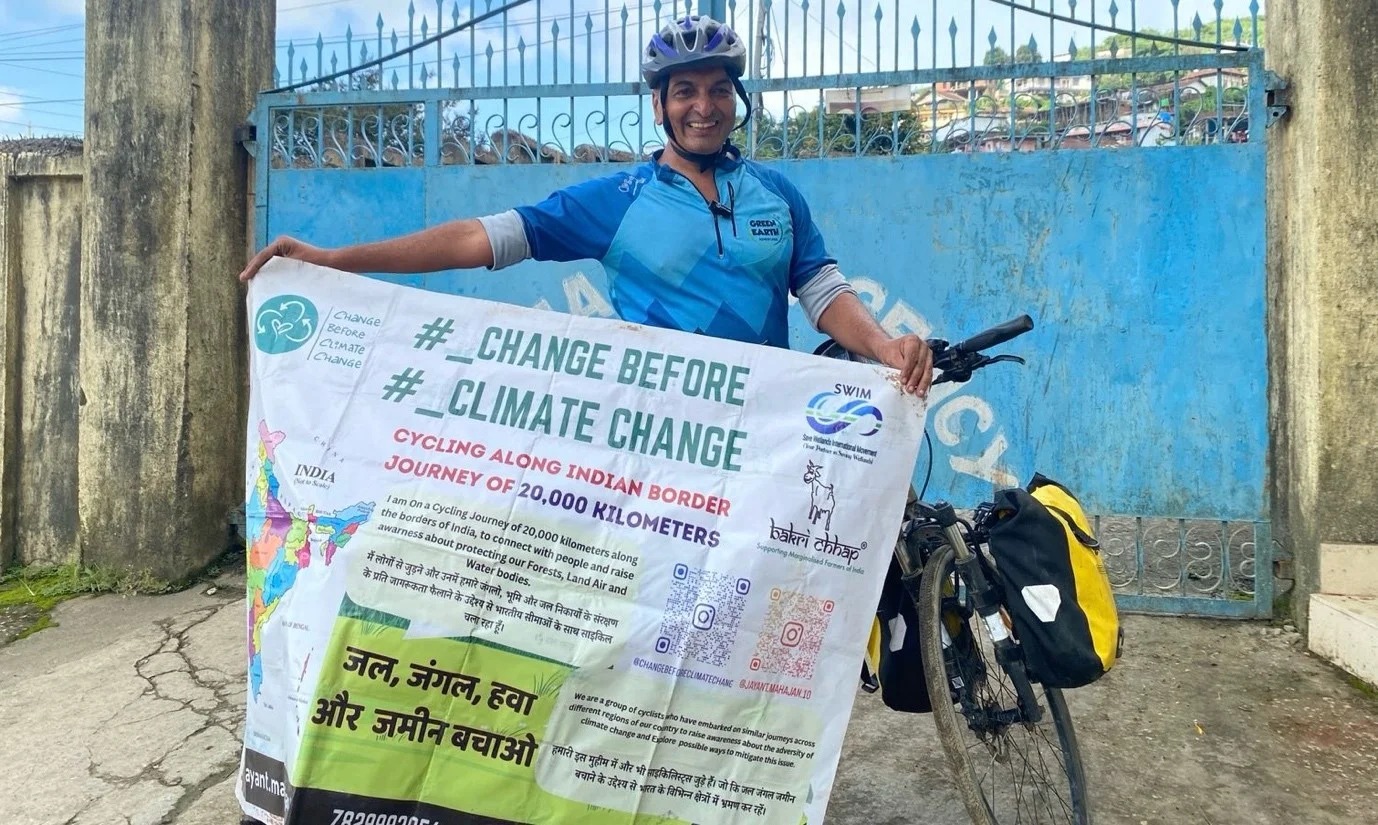
Jayant Mahajan is a writer and contributor at PuneNow, covering the intersection of technology, climate action, and urban governance across Pune. With an extensive background in business management, digital transformation, and academia, Jayant brings real-world insight to local sustainability issues, from civic infrastructure to smart city data ethics. As an educator and founder of the Change Before Climate Change mission, he focuses on how Pune’s institutions and businesses can build future-ready, sustainable systems. Through his columns, Jayant bridges policy, technology, and practical action to help Punekars navigate a rapidly changing urban climate.