ISRO’s Bahubali Does It Again: Why the LVM3-M6 Launch is a Game Changer for India and ISRO
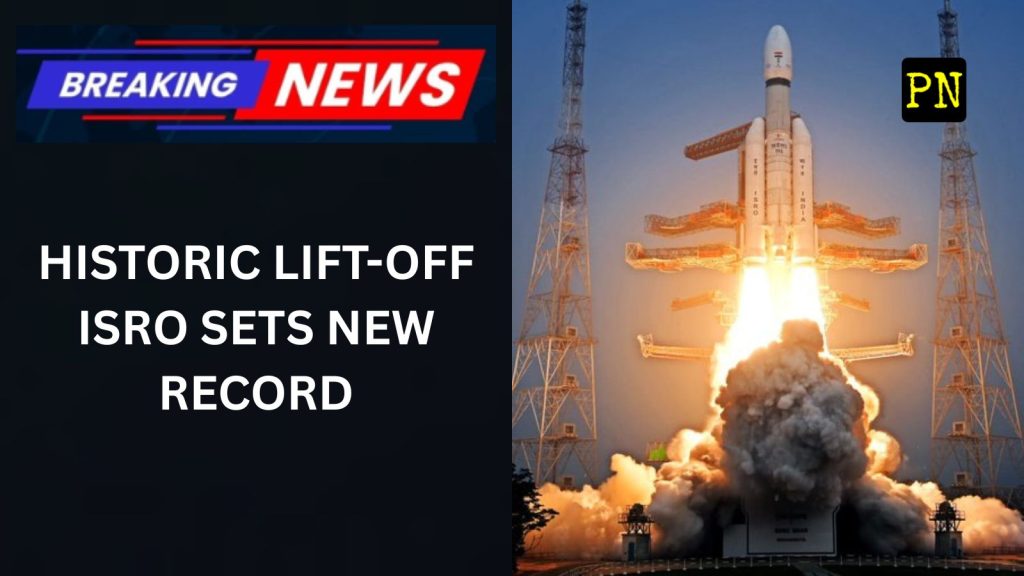

While the world was waking up on Christmas Eve, India’s heaviest rocket was busy rewriting history. At exactly 8:55 AM, the LVM3-M6 didn’t just launch a satellite; it launched India into an elite league of global space “super-powers.”

The global space race is no longer just about planting flags on the moon; it’s about who can carry the heaviest loads with the most precision at the best price. For years, the “Heavy Lift” market was dominated by a handful of Western players. If you had a massive satellite, you went to Florida or French Guiana.
Not anymore.
On December 24, 2025, the Indian Space Research Organisation (ISRO) sent a loud and clear message to the world from the Satish Dhawan Space Centre in Sriharikota. The LVM3-M6 mission successfully placed the 6,100kg BlueBird Block-2, the heaviest satellite ever launched from Indian soil, into its intended orbit.
This isn’t just another successful liftoff; it’s a “pattern interrupt” in the global space economy. For the first time, a premier US-based telecommunications giant, AST SpaceMobile, entrusted its most sophisticated hardware to India’s “Bahubali” rocket. Prime Minister Narendra Modi said, “this marks a “proud milestone” that reinforces India’s role as a dependable, high-capacity hub for the global commercial launch market.”
The Record-Breaker: LVM3-M6 and the 6,100 kg Behemoth
When the clock struck 8:54 AM IST today, the roaring engines of the LVM3-M6 did more than just break the morning silence at Sriharikota; they broke a long-standing record. The mission’s primary objective was the precise deployment of the BlueBird Block-2 satellite, a next-generation spacecraft from the US-based firm AST SpaceMobile.
At a staggering weight of 6,100 kg (approx. 6.1 tonnes), this is officially the heaviest payload ever launched from Indian soil by an Indian vehicle. To put that in perspective, this single satellite weighs as much as two large African elephants combined.
The LVM3, often called ISRO’s “Bahubali”, has once again proven why it is the crown jewel of India’s heavy-lift capabilities. Standing 43.5 meters tall, the three-stage rocket used its massive S200 solid boosters to generate the 2,000 tonnes of thrust needed to escape Earth’s grip. About 15 minutes after liftoff, the satellite was injected into a 520 km Low Earth Orbit (LEO) with a precision of less than 1.5 kilometers, a level of accuracy that ISRO Chairman V. Narayanan called “one of the best in the world.”
A significant stride in India’s space sector…
— Narendra Modi (@narendramodi) December 24, 2025
The successful LVM3-M6 launch, placing the heaviest satellite ever launched from Indian soil, the spacecraft of USA, BlueBird Block-2, into its intended orbit, marks a proud milestone in India’s space journey.
It strengthens… pic.twitter.com/AH6aJAyOhi
The “Space Taxi” Revolution: Why the USA Chose India
In the $400 billion global space market, trust is the most expensive currency. This mission marks a pivotal shift in international dynamics: a premier American telecommunications company choosing India over traditional Western heavyweights like SpaceX or Arianespace for a critical deployment.
The “Commercial Prowess” of NSIL: The mission was facilitated by NewSpace India Limited (NSIL), the commercial arm of ISRO. This wasn’t just a one-off launch; it was the 104th liftoff from Sriharikota and the 9th consecutive success for the LVM3 series, demonstrating a 100% reliability rate.
52 Days of Excellence: Perhaps the most impressive feat is the operational speed. This launch comes just 52 days after the LVM3-M5 mission on November 2nd. For a space agency to turn around its heaviest rocket for two distinct missions in less than two months is a world-class display of logistics and engineering efficiency.
“This success reinforces our growing role in the global commercial launch market and is reflective of our efforts towards an Aatmanirbhar Bharat,” noted Prime Minister Narendra Modi.
By successfully handling the BlueBird Block-2, which features a massive 223-square-meter phased array antenna (the largest commercial communications satellite ever in LEO), India has proven it can handle the most complex and delicate “heavy-lift” cargo the world has to offer.
Why This Matters to the Average Indian: The End of “No Signal” Zones
You might be wondering: “Why does a heavy American satellite launched from Andhra Pradesh matter to someone in Pune, Patna, or Panjim?”
The answer lies in the payload itself. The BlueBird Block-2 is not just a piece of metal; it is a giant cell tower in the sky. Unlike traditional satellite phones that require bulky, expensive handsets, this technology enables Direct-to-Mobile (D2M) connectivity.

The Game Changer: This satellite is designed to communicate directly with the standard 5G smartphone already in your pocket. By deploying these “space towers,” companies like AST SpaceMobile aim to eliminate cellular dead zones globally. Whether you are trekking in the deep Himalayas or sailing in the Indian Ocean, you could soon have a 5G signal without a single ground tower in sight.
Addressing the Skeptics: Some critics argue that India should focus on domestic satellites rather than commercial launches for foreign firms. However, from a strategic perspective, this is a masterstroke:
- Economic ROI: Commercial launches through NSIL bring in massive foreign exchange.
- Infrastructure Proofing: Handling the world’s most complex satellites (like the 223-sq-meter BlueBird antenna) perfects the technology ISRO will use for India’s own future massive communication arrays.
- Global Diplomacy: Being the “Launchpad of Choice” for the US strengthens the Indo-US space corridor, paving the way for joint missions like the upcoming NASA-ISRO Synthetic Aperture Radar (NISAR).
Frequently Asked Questions about LVM3-M6 and BlueBird Block-2
Q1: What is the LVM3-M6 mission? A: The LVM3-M6 is a dedicated commercial mission by ISRO’s commercial arm, NSIL. It successfully launched the 6,100 kg BlueBird Block-2 satellite, the heaviest payload ever launched from Indian soil, using India’s most powerful rocket, the LVM3.
Q2: Why is the BlueBird Block-2 satellite significant? A: Belonging to AST SpaceMobile, it is the largest commercial communications satellite ever placed in Low Earth Orbit. It features a massive 223-square-meter antenna designed to provide 5G cellular broadband directly to standard smartphones.
Q3: Is LVM3 the same as GSLV Mk III? A: Yes, the Launch Vehicle Mark-3 (LVM3) was formerly known as the GSLV Mk III. It was renamed to reflect its capability to launch heavy payloads into both Low Earth Orbit (LEO) and Geosynchronous Transfer Orbit (GTO).
Q4: How many consecutive successes does the LVM3 have? A: With the completion of the M6 mission, the LVM3 has maintained a perfect record of 9 consecutive successful launches, making it one of the most reliable heavy-lift rockets in the world today.
Q5: What was the turnaround time between LVM3-M5 and M6? A: ISRO achieved a remarkable turnaround of just 52 days between the LVM3-M5 launch (November 2) and the LVM3-M6 launch (December 24), showcasing world-class operational efficiency.
India’s Giant Leap into the Future
As the LVM3-M6 drifted into the silence of orbit this morning, it carried with it the aspirations of over 1.4 billion people. The successful deployment of the BlueBird Block-2 is not just a technical checklist completed; it is a validation of India’s growing “soft power” in the high-stakes world of aerospace.
By launching the heaviest satellite ever from Indian soil with a precision of less than 1.5 kilometers, ISRO has demonstrated that it isn’t just a cost-effective alternative, it is a global leader in accuracy and reliability. This 104th launch from Sriharikota proves that the “Bahubali” rocket is ready to be the workhorse for the world’s most sophisticated commercial interests.
The implications for the common man are equally profound. We are standing on the cusp of an era where “no signal” becomes a phrase of the past. As this constellation of “space towers” grows, it will bridge the digital divide, bringing 5G connectivity to the remotest corners of India and the world.
Today, India celebrates more than just a rocket launch. We celebrate the spirit of Aatmanirbhar Bharat, the brilliance of our scientists, and a future where the sky is no longer the limit, it is our new frontier.