Desert Miracle or AI? Rare Snowfall Blankets Saudi Arabia; Riyadh and Tabuk Witness Historic Cold Wave
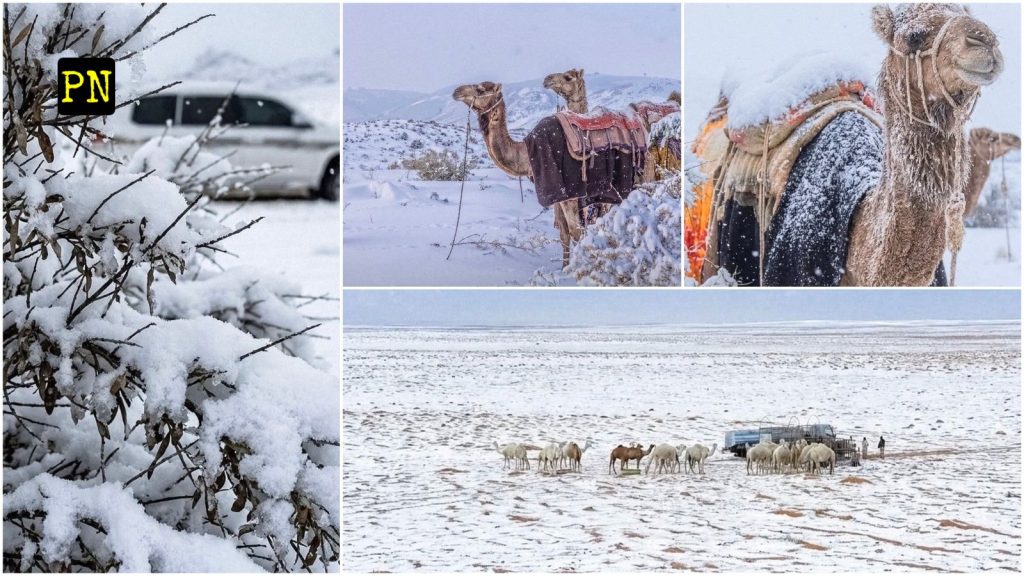

TABUK, SAUDI ARABIA – A powerful polar front has transformed the golden dunes of northern Saudi Arabia into a stunning white landscape, sparking a global viral sensation and an intense debate over the authenticity of the footage. While the kingdom is famed for its scorching desert heat, temperatures plummeted to a bone-chilling -4°C this week, bringing heavy snowfall to the mountains of Jabal Al-Lawz and rare flurries to the outskirts of the capital, Riyadh.

Is the Saudi Snow Real or AI? Verified News vs. Social Media Skepticism
As videos of camels trekking through snow-blanketed deserts and residents brewing coffee in “Alpine-style” conditions flooded platforms like X and Instagram, thousands of users questioned if the visuals were AI-generated.
However, the Saudi Press Agency (SPA) and the National Center of Meteorology (NCM) have officially confirmed the event. Meteorologists state that a low-pressure system originating from the Arabian Sea clashed with a cold air mass from the Mediterranean, creating the perfect “storm” for snow in the desert.
Riyadh and Tabuk: Regions Under Red Warning
The rare weather event has not been without its disruptions. The NCM issued “Red Warnings” across several provinces, citing risks of flash floods and black ice.
- Jabal Al-Lawz (Tabuk): The 2,580-meter “Almond Mountain” saw the heaviest accumulation, attracting thousands of domestic tourists.
- Northern Riyadh: Areas like Al-Majmaah and Al-Ghat experienced unprecedented snowfall, leading authorities to move all schools to remote learning on Thursday.
- Al-Jawf and Hail: These regions, typically arid, saw a mix of hail and snow that revitalized local valleys but triggered strict travel advisories.
Snow covered desert in Saudi Arabia pic.twitter.com/U7Ct2slCJz
— Curiosity (@MAstronomers) December 20, 2025
Climate Change or Annual Occurrence?
While snowfall in the high peaks of Tabuk happens periodically, experts suggest the intensity and geographic spread—reaching as far south as Riyadh’s suburbs—are markers of shifting West Asian climate patterns.
“This is a winter miracle for us,” said Thamr Alotaibi, a resident of Riyadh who traveled north to witness the event. “We have never seen the desert look like the Swiss Alps before.”
Safety Guidelines for Travelers
Authorities have urged citizens to avoid open desert areas and valleys during peak cold hours. The General Directorate of Civil Defense warned of reduced visibility and slippery roads, particularly on the highways connecting Tabuk to the rest of the Kingdom.