Cooking and Driving Set to Become Cheaper as Domestic PNG and CNG Prices to Decrease from January 2026
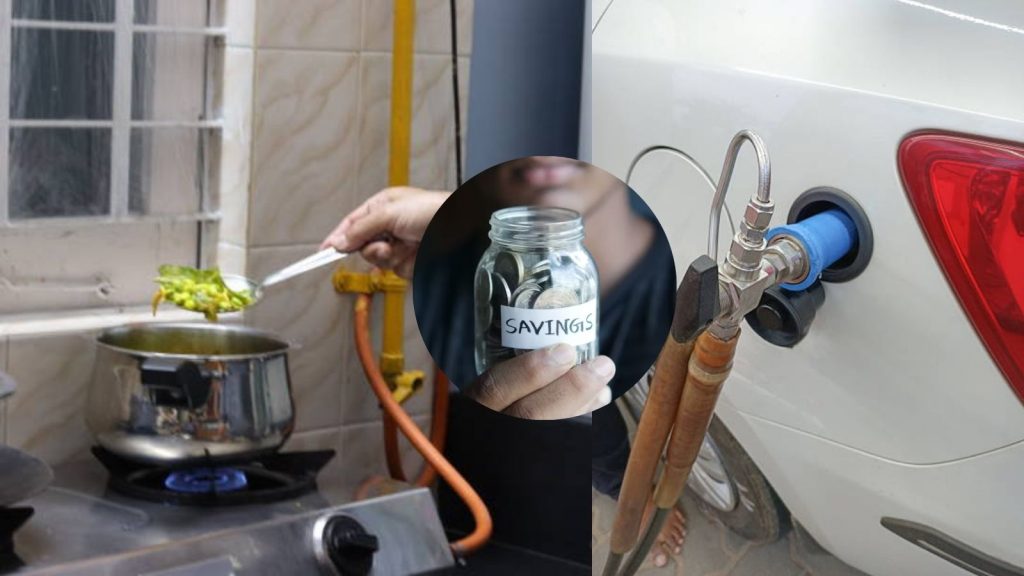

In a major relief for millions of Indian households and vehicle owners, the prices of Compressed Natural Gas (CNG) and domestic Piped Natural Gas (PNG) are set to decrease significantly starting January 1, 2026.

PNGRB Announces ‘One Nation, One Grid, One Tariff’ Reform
The Petroleum and Natural Gas Regulatory Board (PNGRB) has officially notified a landmark tariff rationalization policy aimed at making cleaner fuels more affordable. Under the new “One Nation, One Grid, One Tariff” framework, the regulator has simplified the transportation fee structure by reducing the number of distance-based zones from three to just two.
Crucially, the PNGRB has mandated that all CNG and domestic PNG consumers nationwide will now be charged the lowest Zone-1 tariff of ₹54 per MMBTU, regardless of their distance from the gas source. This move eliminates the higher tariff slabs of ₹80 and ₹107 that previously applied to regions located far from gas injection points.
Expected Price Reduction: How Much Will You Save?
The rationalization of transportation costs is expected to result in a direct price cut of ₹2 to ₹3 per unit for end consumers. According to official estimates from the PNGRB:
- CNG Prices: Likely to fall by ₹1.25 to ₹2.50 per kg.
- Domestic PNG Prices: Expected to drop by ₹0.90 to ₹1.80 per SCM (Standard Cubic Metre).
“We have rationalized the tariff to ensure that the benefit reaches the common man. The first zone rate will now apply on a pan-India basis for priority sectors,” stated AK Tiwari, Member, PNGRB. He further emphasized that the regulator will strictly monitor City Gas Distribution (CGD) companies to ensure these savings are passed on to consumers.
Impact on 312 Geographical Areas and CGD Companies
This reform is set to benefit consumers across 312 geographical areas in India. Major City Gas Distribution players, including Indraprastha Gas Ltd (IGL), Mahanagar Gas Ltd (MGL), and Adani Total Gas, are expected to implement the revised rates from the first day of the New Year.
By streamlining the cost of moving gas through the national grid, the government aims to reduce regional price disparities. For households in states further away from gas terminals, who previously paid a premium due to high transportation costs, this unified tariff represents a nearly 50% reduction in pipeline charges.
Market Reaction and Energy Security
The announcement has already sent ripples through the stock market, with shares of IGL and MGL surging by 6-7% as analysts expect higher volume growth and improved margins. This policy aligns with India’s broader vision to increase the share of natural gas in its energy mix from the current 6% to 15% by 2030, promoting a shift toward sustainable and cost-effective fuel.