5 Hidden Sensors in Your Smartphone That Can Replace Costly Gadgets
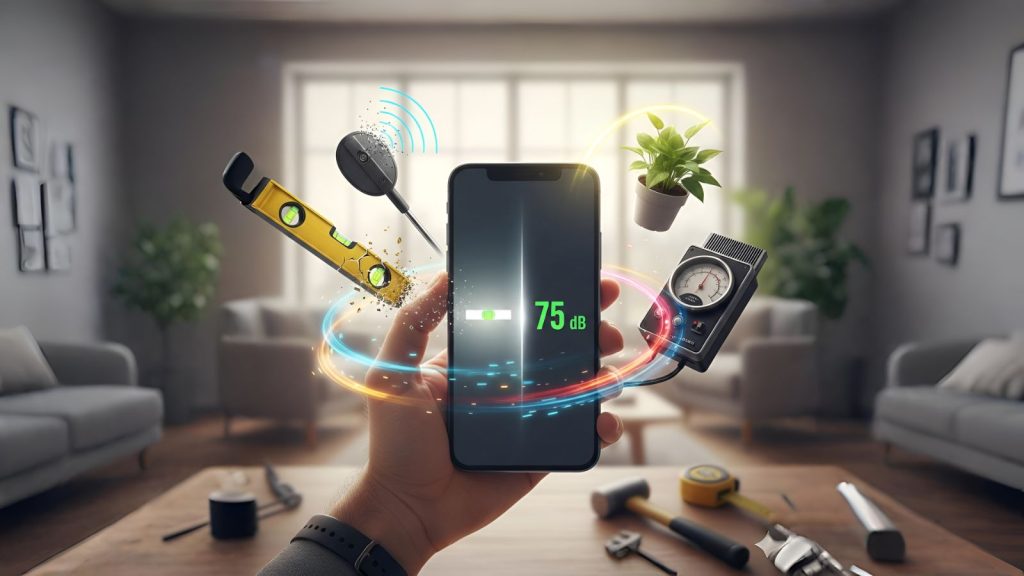

In an era where “there’s an app for everything,” we often overlook the powerhouse of hardware already sitting in our pockets. Your smartphone is more than just a communication device; it is a sophisticated suite of scientific instruments. For those looking to save a few thousand rupees on specialized tools for DIY home projects or outdoor activities, the answer might already be in your hand.
From the accelerometer to the magnetometer, here are five internal sensors that can officially replace standalone gadgets you were planning to buy.
1. Accelerometer & Gyroscope: The Digital Spirit Level
Stop rummaging through your toolbox for a bubble level. Your phone’s 3-axis accelerometer tracks motion and orientation, while the gyroscope measures angular velocity.
- The Replacement: A Spirit Level/Inclinometer.
- Use Case: Whether you are hanging photo frames in your living room or ensuring a new shelf is perfectly straight, apps like Physics Toolbox Suite provide a digital readout of exactly how many degrees off-level a surface is. It’s as accurate as a physical tool for most household tasks.
2. Microphone Array: The Decibel (SPL) Meter
If you’ve ever had a dispute with a neighbor over loud music or wanted to ensure your child’s study environment is quiet enough, your phone’s microphone is your best witness.
- The Replacement: Sound Pressure Level (SPL) Meter.
- Use Case: While professional meters cost upwards of ₹2,500, phone apps can measure sound levels within a ±2 dB range (between 65–95 dB). It’s perfect for checking if your Bluetooth speaker is hitting a hearing-safe 70 dB or a dangerous 90 dB.
3. Magnetometer: The DIY Stud Finder
Hanging a heavy mirror or a flat-screen TV requires finding a wall stud or avoiding metal pipes. Your phone contains a magnetometer to power its internal compass, which can also detect magnetic fields.
- The Replacement: Metal Detector/Stud Finder.
- Use Case: By using a magnetometer view, you can see live spikes in magnetic field strength when moving the phone over drywall. This helps locate electrical wires or metal pipes before you start drilling.
4. Barometer: The Portable Altimeter & Fishing Guide
Many modern Android devices include a barometer to measure atmospheric pressure. While it primarily assists GPS accuracy, it is a goldmine for hikers and anglers.
- The Replacement: Altimeter / Barometric Weather Station.
- Use Case: Weather apps pull data from distant stations, but your phone reads the pressure exactly where you stand. Anglers use this to predict fish activity (trout feeding patterns often change with pressure), while hikers can use it as a reliable altimeter for altitudes up to 3,500 meters.
5. Ambient Light Sensor: The Budget Lux Meter
That tiny sensor near your earpiece that adjusts your screen brightness can also measure the intensity of light in a room.
- The Replacement: Lux Meter.
- Use Case: If you are a plant parent trying to decide which corner of your balcony gets the most “bright indirect light,” a Lux Meter app can help. It’s also useful for verifying if those expensive LED bulbs you bought actually deliver the brightness promised on the box.
The Bottom Line
While these sensors won’t replace lab-grade equipment for professional certification, they are more than sufficient for everyday DIY tasks and hobbyist needs. Before you head to the hardware store or browse an e-commerce site for a single-purpose gadget, check your app store. Your phone is likely the most versatile tool you’ve ever owned.